Sembramos Prosperidad
Project
Project

The Más Árboles Project

The Más Árboles Project is a large-scale land restoration initiative in Peru, designed to restore degraded land while strengthening rural livelihoods.

The project integrates tree planting, land management, and community-driven development into a coherent system that generates long-term environmental and economic value.

Objective

Objective

The project aims to:

  • restore degraded land through tree-based systems 
  • increase carbon sequestration 
  • improve productivity and resilience of rural landscapes 
  • strengthen household income and local economies 

The focus is not only on planting trees, but on building systems that continue to function and generate benefits over time.

How the Project Works

How the Project Works

The project is based on a structured collaboration:

  • Sembramos Prosperidad coordinates project design, monitoring, and certification 
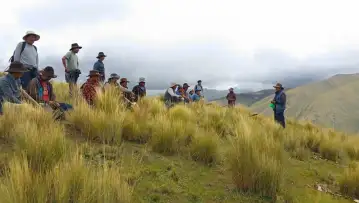
  • Pachamama Raymi implements field activities and works directly with communities using its established methodology 
  • INCUSE carries out carbon accounting and benefit allocation 
  • Sembramos Prosperidad structures and reviews monitoring, data, and reporting 

This separation of roles ensures clarity, accountability, and consistency.

The Pachamama Raymi Methodology

The Pachamama Raymi Methodology

Field implementation is carried out through the Pachamama Raymi methodology.

This methodology is based on:

  • learning through practice 
  • farmer-to-farmer exchange 
  • incentives for best performance 
  • strengthening local capacity and organization 

It has been applied successfully over many years in rural development contexts and is designed to create sustained behavioral change and long-term adoption.

More information: Pachamama Raymi

Monitoring and Data

Monitoring and Data

Sembramos Prosperidad organizes monitoring systems for the project:

  • field data is collected at the level of project areas and participants 
  • monitoring covers environmental, livelihood, and implementation indicators 
  • Pachamama Raymi records field data, and Sembramos Prosperidad stores and organizes the data in the project database 
  • monitoring results feed into annual reporting 

Sembramos Prosperidad designs monitoring to ensure consistency, traceability, and readiness for verification.

Carbon and Certification

Carbon and Certification

Sembramos Prosperidad develops the project under the Plan Vivo Standard, reports monitoring results annually to Plan Vivo, and shares results with participating communities and Pachamama Raymi.

INCUSE estimates carbon benefits using methodologies approved under the Plan Vivo Standard 

Plan Vivo validation and verification processes assess project performance 

INCUSE carries out carbon accounting and allocation, and Sembramos Prosperidad reviews the results for consistency with monitoring data and project implementation.

Project Development Phase

Project Development Phase

Sembramos Prosperidad is currently developing the project and progressing through validation.

  • project design has been completed 
  • Sembramos Prosperidad is strengthening systems for monitoring and reporting 
  • Pachamama Raymi is implementing project activities 

Documentation and reporting will be made available following validation.

Long-Term Perspective

Long-Term Perspective

The project is designed as a long-term system:

  • early years focus on establishment and system development 
  • later years focus on consolidation and productivity 
  • Sembramos Prosperidad develops and updates monitoring and reporting systems over time 
  • local capacity is strengthened to ensure continuity 

Over time, external support is expected to decrease as systems mature and local actors take on a larger role.

Scale and Impact

The project operates across multiple communities and landscapes.

Its impact is expected to include:

  • restored land and increased tree cover 
  • improved soil and water conditions 
  • higher and more stable rural incomes 
  • measurable and verifiable carbon benefits 

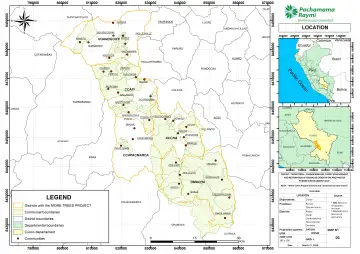
The project is being implemented in the following districts:

  • Accha
  • Ccapacmarca
  • Ccapi
  • Huanoquite
  • Omacha
  • Paccaritambo
Communities Intervened